
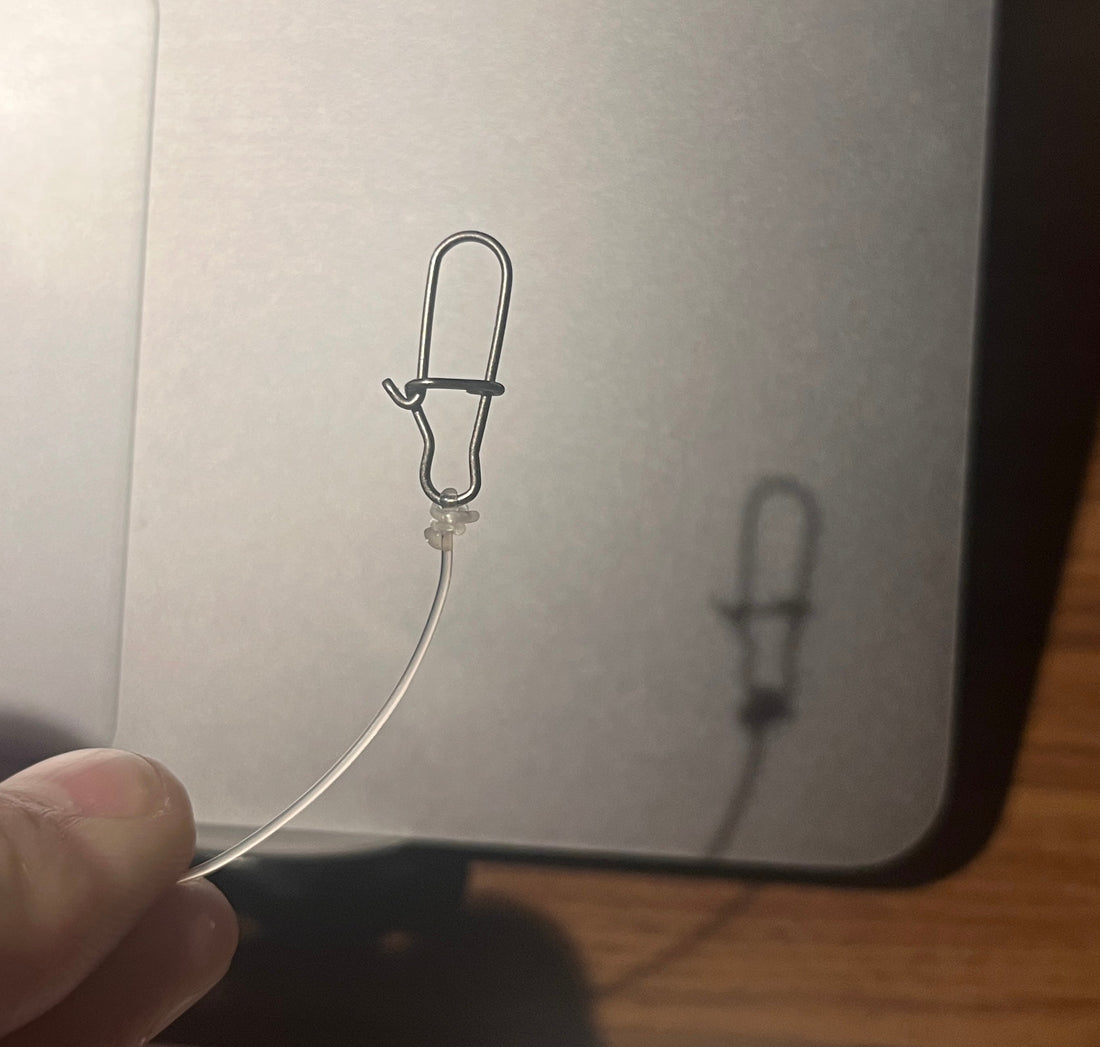
Wire or Fluorocarbon – Which is better for predator fishing?
Deli
When it comes to predator fishing, the question often arises as to what to use as a leader – steel wire or heavy fluorocarbon? Both options have their pros and cons, but from personal experience, I can say that I am much more of a fan of fluorocarbon. Why? Because I feel it brings more bites and a more natural lure presentation, while wire has let me down more than once. But let's take a closer look at both options.
Steel wire – durable, but noticeable
For many years, steel wire was my first choice for predator fishing, especially for pike and catfish. It is an extremely durable material that easily withstands the bite of a pike, whose teeth are very sharp.
Advantages of wire:
- Complete bite resistance – Even the largest pike won't easily bite through good steel wire.
- Long service life – Wire does not wear out or stretch as quickly as fluorocarbon.
- Choice of flexibility – Softer and stiffer versions are available, depending on the fishing technique.
- Reliability – It will never snap due to a bad knot because it is crimped.
Disadvantages of wire:
- More visible in water – For me, this is the most important disadvantage. Predator fishing is often associated with wary fish that can spot the wire and therefore ignore the lure.
- Stiffness – If the wire is too stiff, it can ruin the natural action of the lure.
- Memory - after time, the wire starts to develop a strange shape/memory, which again changes the lure's action.
- Poorly made - no matter which brand of wire I bought, the crimp/joint always gave out sooner than my line...
Fluorocarbon – more discreet, but less resistant
Fluorocarbon is a material that has become extremely popular in recent years, mainly due to its low visibility in water and abrasion resistance. I use it whenever I fish for wary predators – especially in clear water.
Advantages of fluorocarbon:
- Less visible in water – Fluorocarbon has almost the same refractive index as water, which means fish have a harder time spotting it.
- More natural lure action – It is softer than wire and allows for smoother lure movement.
- Good abrasion resistance – It is not unbiteable, but heavy fluorocarbon (at least 0.8 mm) can withstand a huge number of bites.
- Simpler use – You can use knots with it that you cannot use with wire.
Disadvantages of fluorocarbon:
- Less bite resistant – If you take it too thin, a large pike or catfish can bite through it.
- Can break at strong knots – Under heavy loads, you need to pay attention to quality and tying knots correctly.
My choice? Fluorocarbon!
For me personally, fluorocarbon is the winner, but with a few conditions:
- It must be at least 0.8 mm thick – below this thickness, you risk a bite-off.
- The length should be 30 cm or more to reduce the chance of the fish reaching the main line or spotting it.
- Regular checking and replacement – If the fluorocarbon shows signs of wear, I replace it immediately.
I used wire in the past, but it let me down more than once – either the crimp/joint gave out when I snagged the bottom, or I noticed fewer bites. Fish clearly spot it sooner and avoid it. But what do I know, I'm not a biologist!
Anyway, whether it's wire or fluorocarbon, it's important to use at least one of the two, adapt to the fishing conditions, and choose the right equipment for your needs. I'm sticking to the side of fluorocarbon – until some trophy pike convinces me otherwise! 🎣
What do you use? Write in the comments and share your experiences!
Tight lines!